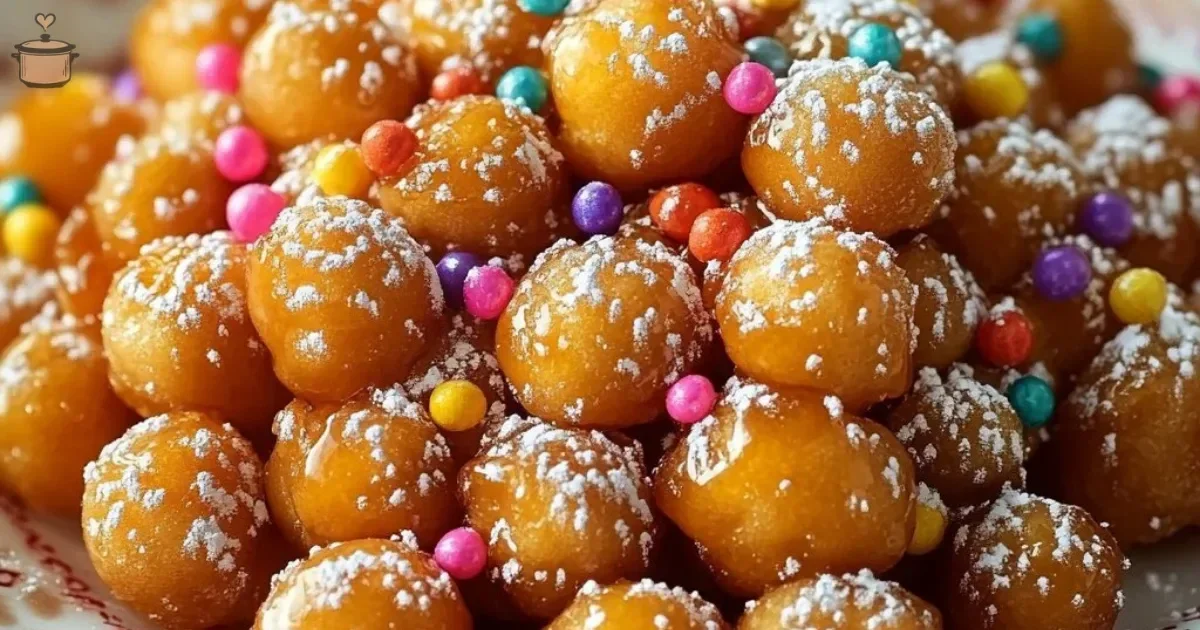
Classic Struffoli (Italian Honey Balls) always smells like Sunday at my grandmother’s house. The citrus zest lifts the honey into a bright perfume, and the pans whisper as they warm on the stove. I remember a platter of glossy golden balls in the center of the table, children bobbing for a sprinkle, adults lingering over espresso. Classic Struffoli (Italian Honey Balls) brings that warmth back, every time.
Why Classic Struffoli (Italian Honey Balls) Still Belongs at the Table

Struffoli sit on holiday tables the way stories sit in our laps. They are a little piece of joy that travels through generations. For Italian-American families, these honey balls mean more than dessert. They mean gathering, laughter, and the way hands learn a recipe by feeling dough between fingers.
When I was a girl, my aunt shaped each little ball with the same patient rhythm. We would watch the oil bubble like a small summer pond, and she would hum a tune I never learned to name. Making Struffoli is an act of care. It is slow enough to be calming and festive enough to become the centerpiece of celebration desserts.
Classic Struffoli (Italian Honey Balls) fit into the long list of italian dessert recipes that hold memory in their taste. They pair easily with coffee or an after-dinner digestif. They travel well, they share well, and they make you feel grounded in a kitchen that has known many winters.
Bringing Classic Struffoli (Italian Honey Balls) Together With Care
“Every dessert like this carries a memory, whether you realize it or not.”
Before we shape and fry, take a breath and listen to the kitchen. Struffoli are simple in ingredients but gentle in their rhythm. The aroma of citrus zest over warm butter, the stick of honey, and the crisp promise of fried dough create a small ceremony.
I like to lay out ingredients, preheat the oil, and keep a bowl of warm honey ready on the stove. Making these is about texture as much as taste. You want a dough that yields without sticking, honey that runs warm and glossy, and pieces that fry quickly to a tender crunch. From there, the rhythm of rolling, frying, and coating becomes almost meditative.
These steps also give you room to make this recipe your own. You can think of it as part of easy italian desserts for a busy afternoon or a more deliberate celebration dessert for a holiday table. Classic Struffoli merges the two worlds homey and festive.
What You’ll Need to Make Classic Struffoli (Italian Honey Balls)
- 2 cups all-purpose flour
- 1/4 cup granulated sugar
- 3 large eggs
- 1/4 cup unsalted butter, melted
- 1/2 cup honey
- Zest of 1 lemon and 1 orange
- Vegetable oil for frying
- Rainbow sprinkles for decoration
- Pinch of salt
A few gentle notes on ingredients:
- Use fresh eggs at room temperature for a dough that comes together smoothly and bakes evenly.
- Real butter gives a softer, richer flavor than margarine. It also helps the dough hold together.
- Honey quality matters. A mild, floral honey works well so the citrus and butter can sing through.
- Vegetable oil offers a neutral frying flavor and a high smoke point. You can use sunflower or canola as alternatives.
- For a slightly sweeter crunch, you can add a tablespoon of orange liqueur to the honey while warming it.
These are pantry-friendly items you likely have or can find easily. Because this recipe is simple, each ingredient plays a clear role in texture and taste. Think of them like a small chorus: the flour gives structure, the eggs add richness, the butter smooths, and the honey ties everything into a glossy finish.
Step-by-Step Directions
- In a large bowl, mix the flour, sugar, and salt.
Add the eggs, melted butter, and citrus zest.
Mix until a dough forms, feeling it turn from sticky to smooth under your hands. - Divide the dough into small portions and roll into thin ropes.
Cut the ropes into small, pea-sized pieces, watching them become tiny orbs.
Keep the pieces uniform so they fry at the same pace. - In a large pot, heat vegetable oil to 350°F (175°C).
Test with a small piece of dough; it should sizzle gently and float.
Keep the oil steady to get even, golden balls. - Fry the dough balls in batches until golden brown, about 2-3 minutes per batch.
Remove with a slotted spoon and drain on paper towels, feeling the crispness at the edges.
Work in small batches to keep the oil from cooling too much. - In a large saucepan, warm the honey over low heat.
Add the fried dough balls and stir to coat evenly, making sure each ball gets a glossy sheen.
The honey should be warm and fluid, not scorching, so it clings smoothly. - Arrange the honey-coated Struffoli on a platter and decorate with rainbow sprinkles.
Press gently so the balls stick together in a mound and the honey forms a glistening shell.
Serve immediately, while the honey is soft and the contrast of crisp and tender is at its best.
Each step is tactile and alive. You will notice the dough go from grainy to cohesive, the rope feel silky under your palm, and the oil’s surface ripple when dough drops in. These small signs tell you everything about timing and doneness.
Serving Classic Struffoli (Italian Honey Balls) With Love
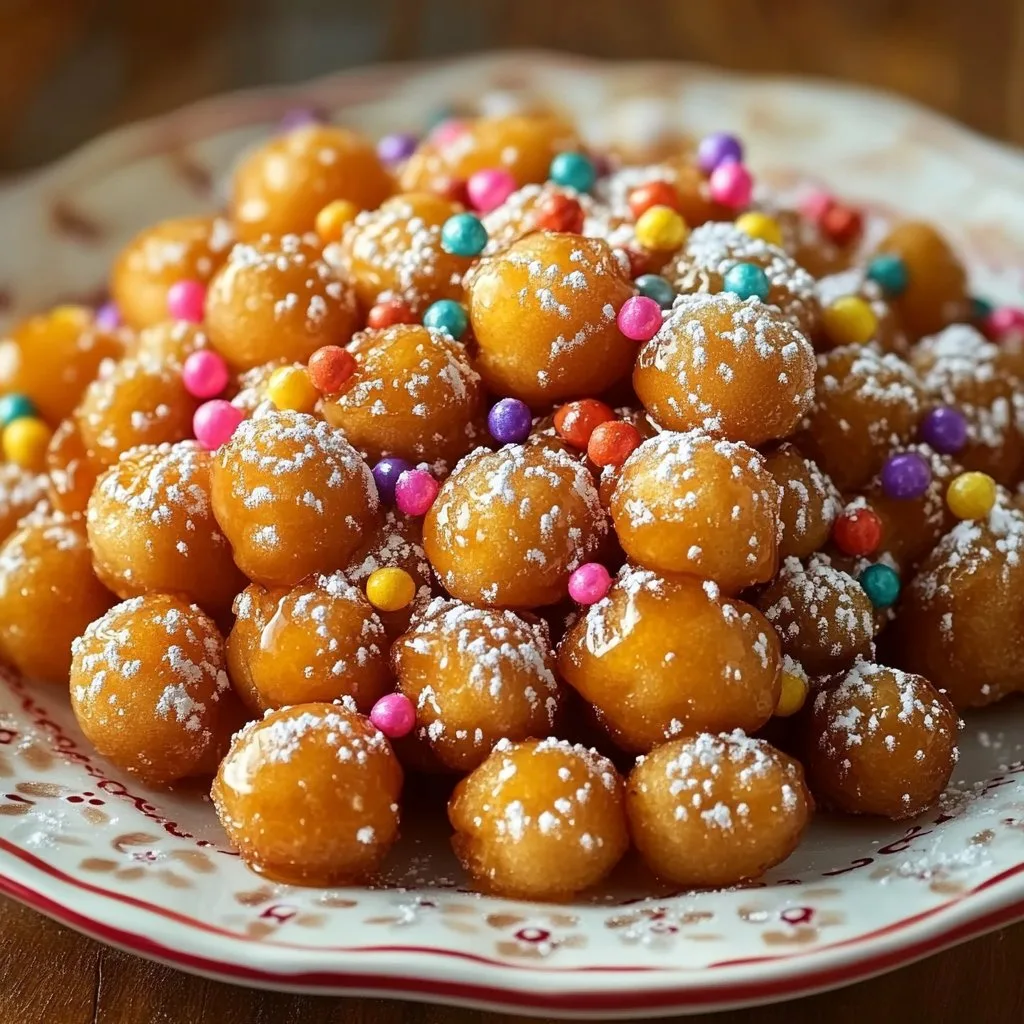
Bring the platter to the table like you are offering a small celebration. These honey balls look like a crown of sweetness. They invite people to reach in, take one, and taste the history that shaped them.
Serve Struffoli with espresso after a heavy meal or beside a pot of tea for an afternoon visit. They balance well against strong coffee, which cuts the honey and highlights the citrus notes. For a festive touch, place a small bowl of extra sprinkles or chopped toasted almonds nearby so guests can customize a piece.
When we have Struffoli in my home, someone always brings out a camera or a story. Someone else will take a larger piece than they need, and we all laugh about it. This is the magic of celebration desserts; they make a moment richer and more connected.
If you plan to present them as a center dessert for a holiday, consider a shallow bowl or a cake stand. Arrange with some citrus slices for color and fresh mint for a modest herbal note. The visual is as important as flavor when something becomes part of family ritual.
How to Store Classic Struffoli (Italian Honey Balls)
Struffoli keep their best texture for a short window. The honey will soften the exterior as time passes, and the crunch will mellow.
Short term: Store in an airtight container at room temperature for up to two days. Place a piece of parchment between layers to prevent sticking.
Refrigeration: You can refrigerate for up to a week, but know that refrigeration changes texture. The honey will firm and the crispness will soften. Bring them to room temperature before serving to recover some shine.
Freezing: Freeze in a single layer on a sheet pan, then transfer to a sealed bag. Freeze up to one month. Thaw on the counter and warm in a low oven for a few minutes to restore some crunch.
Reheating: Warm a few minutes at 300°F, watching that the honey does not scorch. A quick zap in a microwave will soften the honey but not restore crunch. A low oven works best for texture.
Flavor note: Like many homemade cake and pastry treats, Struffoli often taste deeper the next day as the honey and citrus meld. If you make a batch ahead, I find they hold their charm and become a favorite with a late cup of coffee.
Giulia’s Kitchen Notes
- Keep dough small and uniform. Small, pea-sized pieces fry evenly and give you the right crisp-to-tender ratio. Use a ruler or a visual guide if you want consistent size.
- Oil temperature matters more than exact time. A digital thermometer helps, but you can test with a small piece of dough. If it browns too fast, reduce the heat. If it takes too long, raise it a touch.
- Warm the honey gently. You want it fluid enough to coat without turning thin or burning. Low heat keeps the flavor bright and the aroma of citrus alive.
- Work with a helper if possible. One person can fry while the other warms honey and coats the pieces. It makes the process social and keeps the timing clean.
- Presentation tip: Press the honey-coated balls lightly in a bowl or on a platter to shape a ring or mound. The honey glues them together and makes a striking centerpiece.
These tips come from years of baking for holidays, birthdays, and quiet Sundays. They make a difference in texture and in the ease of the process. I always tell friends: small improvements like uniform pieces and gentle honey warming create the biggest joy at the table.
Family Twists on Classic Struffoli (Italian Honey Balls)
Struffoli welcome changes. Each kitchen adapts them to its taste and to the ingredients at hand. Here are gentle variations that still feel like home.
Citrus-forward: Add more lemon or orange zest to the dough, or brush the honey with a little orange liqueur while warm. This brings a bright, fresh note that lifts the sweetness.
Chocolate-hint: Toss a handful of mini chocolate chips into the warm honey before coating. The heat will soften them just a touch, creating small pockets of chocolate in the mound.
Nutty crunch: Sprinkle toasted chopped almonds, pistachios, or hazelnuts over the honey before it sets. It adds texture and an extra layer of flavor that pairs well with espresso.
Spiced honey: Warm the honey with a cinnamon stick, a few whole cloves, or a strip of orange peel. Remove the spices before tossing. This makes the dish more aromatic for winter gatherings.
Miniature celebration: Shape the Struffoli into little nests and add a single candied cherry or a chocolate pearl on top of each one for a wedding or shower dessert. They become bite-sized tokens of sweetness.
These variations can transform a classic into a new family favorite. Each twist is a way to make the recipe your own while keeping its heart intact. Struffoli are forgiving and respond well to gentle experimentation.
FAQs About Classic Struffoli (Italian Honey Balls)
Can I make this ahead of time?
Yes. Desserts like this are patient. In fact, the flavor often settles and deepens overnight. If you make them a day ahead, store at room temperature in an airtight container. Expect the texture to soften slightly.
My dough is sticky. What should I do?
Dust your hands and board lightly with flour and work in small amounts. A short rest in the fridge for 10 to 15 minutes firms the dough and makes rolling easier. Keep a small bowl of flour for fingertips while rolling.
How do I know when the oil is ready?
Use a thermometer for accuracy. Otherwise, drop a small piece of dough in. It should sizzle and float up slowly, forming small bubbles around the edges. If it browns too quickly, the oil is too hot.
Can I bake instead of frying?
You can, but frying gives the classic crisp edges and light interior. Baking will produce a denser texture. If you bake, use a high temperature and small pieces on a parchment-lined sheet, turning halfway to brown evenly.
Why did the honey separate or get hard?
Overheating honey can cause it to loosen and then harden as it cools. Warm it very gently and avoid boiling. If it firms, warm it lightly before coating, but do so slowly.
A Final Sweet Note
Until the next celebration, remember that Classic Struffoli (Italian Honey Balls) are more than a recipe. They are an invitation to slow down, to shape small things with care, and to pass a taste along the table.
Conclusion
If you want a few more classic takes and step-by-step photos to inspire your own presentation, I often look at trusted sources for ideas. For a traditional interpretation, this Struffoli – Italian Honey Balls – Inside The Rustic Kitchen post has clear photos and tips that echo the pantry-friendly spirit of home baking. For another family-style version and community baking notes, this Italian Honey Balls (Struffoli) – Marcellina In Cucina article offers lovely variations and thoughtful steps to guide your next batch.

Classic Struffoli (Italian Honey Balls)
- Total Time: 45 minutes
- Yield: 4 servings 1x
- Diet: Vegetarian
Description
A traditional Italian dessert made of small dough balls fried to a golden brown and coated in honey, often enjoyed during holidays.
Ingredients
- 2 cups all-purpose flour
- 1/4 cup granulated sugar
- 3 large eggs
- 1/4 cup unsalted butter, melted
- 1/2 cup honey
- Zest of 1 lemon and 1 orange
- Vegetable oil for frying
- Rainbow sprinkles for decoration
- Pinch of salt
Instructions
- In a large bowl, mix the flour, sugar, and salt.
- Add the eggs, melted butter, and citrus zest.
- Mix until a dough forms, feeling it turn from sticky to smooth under your hands.
- Divide the dough into small portions and roll into thin ropes.
- Cut the ropes into small, pea-sized pieces.
- In a large pot, heat vegetable oil to 350°F (175°C).
- Test with a small piece of dough; it should sizzle gently and float.
- Fry the dough balls in batches until golden brown, about 2-3 minutes per batch.
- In a large saucepan, warm the honey over low heat.
- Add the fried dough balls and stir to coat evenly.
- Arrange the honey-coated Struffoli on a platter and decorate with rainbow sprinkles.
Notes
Short-term storage: Store in an airtight container at room temperature for up to two days. For longer storage, refrigerate or freeze with proper precautions.
- Prep Time: 15 minutes
- Cook Time: 30 minutes
- Category: Dessert
- Method: Frying
- Cuisine: Italian
Nutrition
- Serving Size: 1 serving
- Calories: 350
- Sugar: 25g
- Sodium: 200mg
- Fat: 12g
- Saturated Fat: 4g
- Unsaturated Fat: 6g
- Trans Fat: 0g
- Carbohydrates: 45g
- Fiber: 2g
- Protein: 8g
- Cholesterol: 30mg