The kitchen smells like old memories folded into something new. There is the soft hiss of a hot grill and the low, steady bubble of a kettle on the stove. Steam curls up and the sweet scent of balsamic vinegar threads through warm olive oil and garlic. I stand with a bowl of bright vegetables, and for a little while the day slows, and the act of cooking becomes a small, steady comfort.
Why Balsamic Grilled Vegetables Deserves a Place at Your Table
There is a quiet joy in simple food that cares for you back. Balsamic Grilled Vegetables do that very thing. They are bright, tender, and a little smoky. They hold a sweetness and a tang that feels like a friendly hand on a busy evening.
This dish brings peace to a crowded day. It asks for a little patience and returns so much. The grill marks speak of warmth and time spent outdoors. The balsamic glaze gives gentle depth that lifts each vegetable without shouting. It is timeless because it asks for what good cooking always asks: fresh ingredients, a steady heat, and a calm hand.
For anyone who wants a slow cooker dinner or a crock pot comfort meal, these vegetables are also forgiving. While I love the seared edges from a hot grill, you can coax the same comfort from low, slow methods when life requires softer rhythms. In the South we call it hospitality in a pan, an easy Southern recipe that gathers people around the table without fuss.
Why this recipe heals and comforts is simple. Vegetables dressed with olive oil and balsamic are nourishing in a way that feels generous. They are practical for weeknight meals yet elegant enough for Sunday supper. They stretch what you have on hand into a plate that is warm, steady, and very kind.
Preparing Balsamic Grilled Vegetables With Ease
“There’s something comforting about letting a meal take its time the kitchen fills with warmth, and the day slows down too.”
Start with a gentle plan. You want vegetables that keep their shape but give easily to a fork. You want a glaze that clings and caramelizes without turning bitter. This is the rhythm: prep, dress, grill, rest, and serve. Each step invites you into a small, steady work that soothes the mind as it feeds the body.
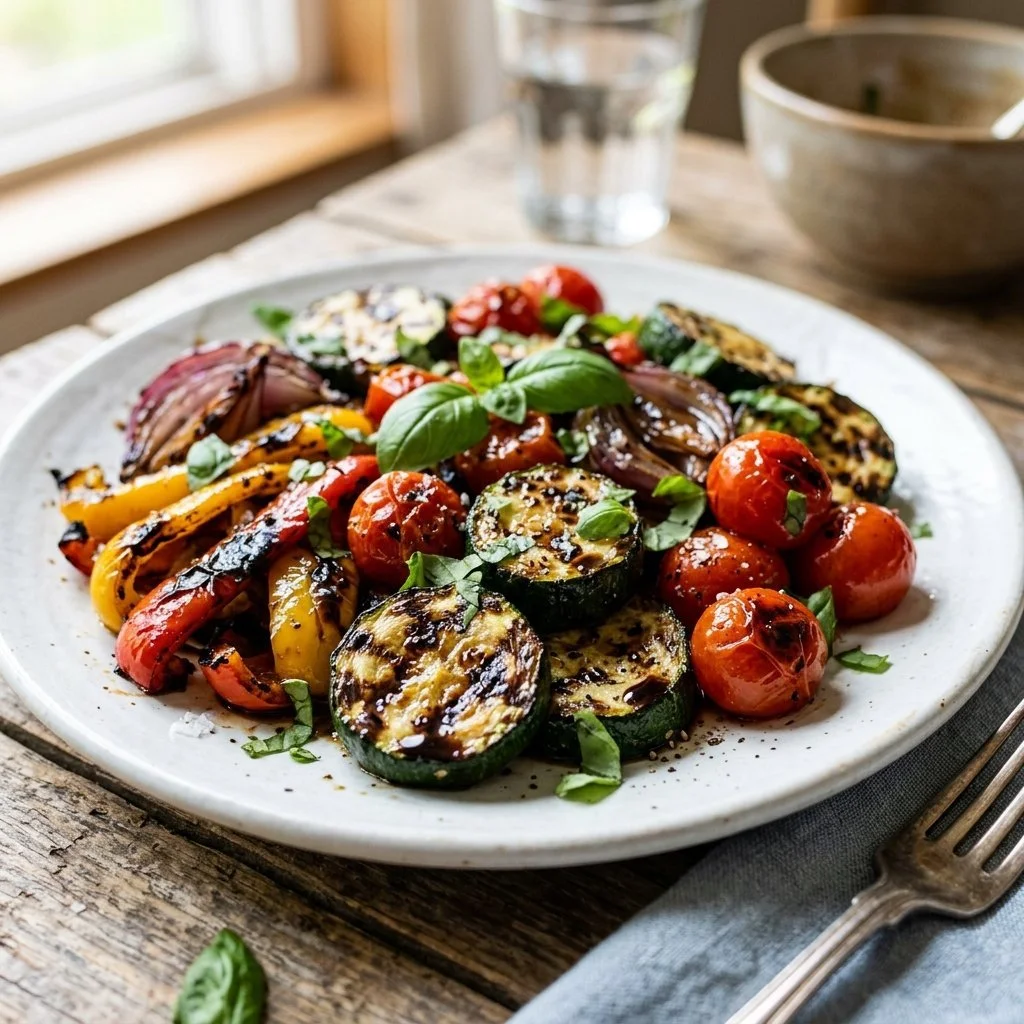
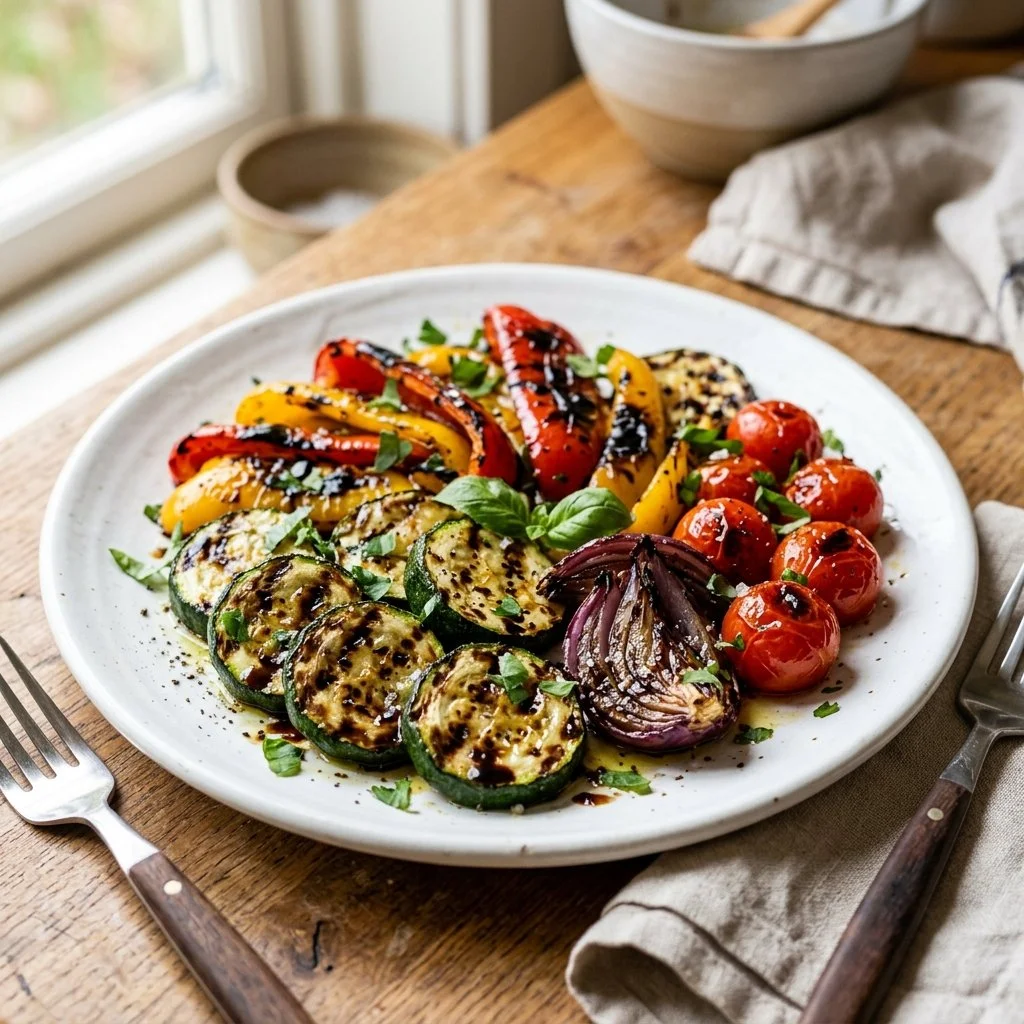
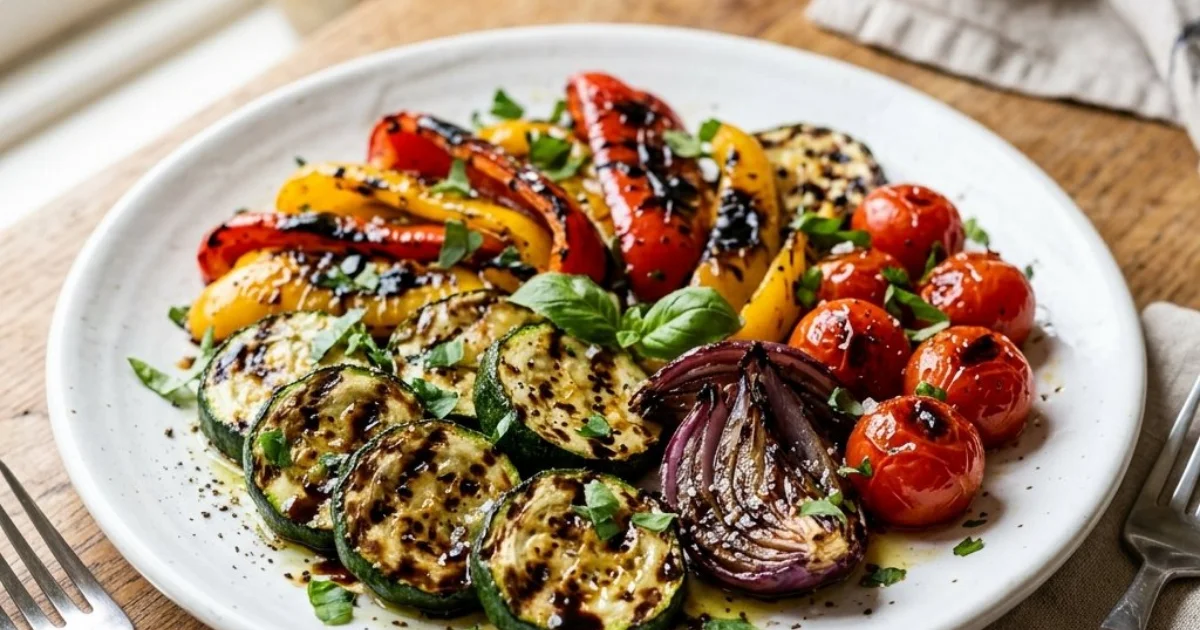
Texture matters. Zucchini should be tender with a faint crunch. Peppers should soften and develop sweet pockets where the skin darkens. Onions should become melting and a little sweet. Cherry tomatoes should blister and release bright juices that meet the balsamic and create a soft, saucy finish. The aroma is part of the comfort. Warm vinegar, garlic, and herbs fill the air and ask nothing but your calm attention.
You will need basic tools: a grill or a hot cast iron pan, a large mixing bowl, tongs, and a small bowl for the dressing. A grill basket helps keep smaller pieces from falling through. A wide, shallow pan or platter for resting the vegetables is kind, allowing the juices to settle and mingle.
From there, the recipe unfolds like a slow song. The ingredients are simple and honest, the method clear and true. You will find yourself returning to this recipe for gatherings and quiet dinners alike.
What You’ll Need for Balsamic Grilled Vegetables
- 2 zucchinis, cut into rounds
- 1 red bell pepper, sliced into strips
- 1 yellow bell pepper, sliced into strips
- 1 red onion, cut into wedges
- 1 cup cherry tomatoes
- 1/4 cup balsamic vinegar
- 3 tablespoons olive oil
- 2 cloves garlic, minced
- 1 teaspoon dried oregano
- Salt and pepper to taste
- Fresh basil for garnish
Friendly note: use low-sodium broth if you prefer a lighter flavor when you want to add a splash of moisture while cooking. If you have fresh oregano, double it. If you prefer a little heat, add a pinch of red pepper flakes to the dressing.
A word about choice: choose firm vegetables that still feel vibrant. Zucchini that is too soft will fall apart on the grill. Red and yellow peppers add sweetness and a friendly color contrast, while the red onion gives you deep, caramel notes. Cherry tomatoes burst and create a gentle glaze that ties everything together.
If you are aiming for a slow cooker dinner or a crock pot comfort meal on a rainy afternoon, you can adapt the same ingredients for a low, long cook. The flavors deepen over time and the vegetables become very tender, perfect for a day when you want to let the house slow down with you.
Step-by-Step Directions
Preheat the grill to medium-high heat.
Make sure the grates are clean and oiled lightly.
Heat gives a quick sear and those lovely grill marks.In a large bowl, combine the zucchinis, bell peppers, red onion, and cherry tomatoes. Toss gently.
Work with even pieces so they cook at the same pace.
Keep the tomatoes toward the top so they do not burst too soon.In a separate small bowl, whisk together balsamic vinegar, olive oil, minced garlic, dried oregano, salt, and pepper.
Whisk until the mixture is smooth and glossy.
This dressing will caramelize and glaze the vegetables as they cook.Pour the balsamic mixture over the vegetables and toss to coat.
Use your hands or tongs to turn each piece gently.
Let them sit for a few minutes so the flavors marry.Place the vegetables on the grill and cook for about 5-7 minutes, turning occasionally, until tender and marked.
Move pieces that cook faster to cooler spots to avoid overchar.
Mini-tip: check tenderness after 6 hours if you chose a slow-cooker method; slow heat will give a softer, more mingled texture.Remove from the grill and garnish with fresh basil before serving.
Let the vegetables rest for a few minutes so the juices settle.
Stir gently to keep the sauce creamy and to distribute the glaze.
Each step is an invitation to slow down. Listen for the gentle sizzle when the vegetables hit the grates. Watch the vinegar and oil unite into a dark, glossy coating as they warm. Those small changes tell you when to turn, to lift, and to rest.
Mini-tips scattered through the steps keep you steady. If a hotter grill gives too much char, dial the heat back and cook a little longer. If your tomatoes begin to burst too early, place them toward the edge. And if you prefer a deeper, sweeter finish, add a small teaspoon of honey or maple syrup to the dressing before tossing.
Bringing Balsamic Grilled Vegetables to the Table
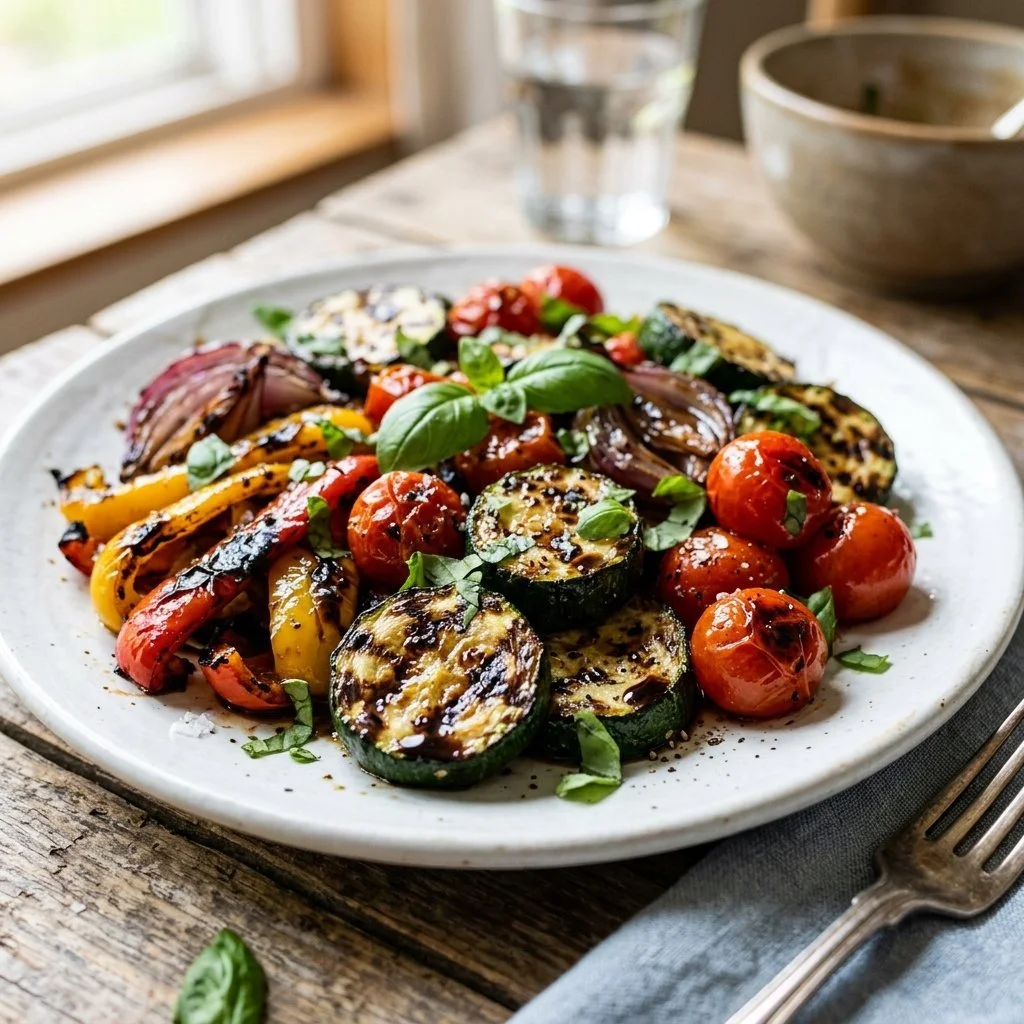
These vegetables look like a story told with color. The bright greens and the reds sit together on a platter that smells of warm garlic and tangy balsamic. Serve them straight from the grill in a mound on a warm plate so every bite catches the glaze.
They make a gentle main for a simple vegetarian evening. Plate them over creamy polenta or spoon them atop buttered, toasted bread for a rustic bruschetta. For a fuller meal, pair with pan-roasted chicken, grilled fish, or a skillet of black-eyed peas. Add a soft goat cheese or a scattering of toasted almonds for a touch of lushness.
For family dinners, set them in a wide bowl and let everyone serve themselves. The shared rhythm of passing serving spoons, tearing basil, and asking for a second piece brings the comfort of home right to the table.
On Sunday evenings, I like to arrange a few small bowls around the platter with extras. A bowl of warmed quinoa, one of sliced lemon wedges, a small dish of shaved Parmesan, and a jar of extra dressing invite people to build their own plate. The vegetables become part of a conversation rather than the single act of eating.
These grilled vegetables hold their charm with casual side dishes. Collard greens, a pot of creamy grits, or a loaf of cornbread from the oven fit beautifully. If you are serving a crowd, the recipe scales well. Toss larger quantities gently and keep the cooked vegetables warm on a low oven rack while you finish grilling the rest.
The scene is quiet and easy. People linger over the taste, and the house keeps the scent of balsamic long after the plates are cleared.
Saving Balsamic Grilled Vegetables for Tomorrow
The flavors of these vegetables often deepen overnight. Store leftovers in an airtight container in the fridge. They will keep well for 3 to 4 days if chilled promptly. The balsamic continues to soak in and soften the textures, making a next-day meal that feels richer and more harmonious.
To reheat, choose the method that suits your mood. A quick toss in a hot skillet brings the glaze back to life and warms the vegetables without overcooking them. A few minutes on a hot grill also restores a little crispness. If you prefer cozy simplicity, microwave in short bursts with a sprinkle of water to keep them from drying.
If you plan to freeze, do so with care. Vegetables with high water content like zucchini and tomatoes will change texture after freezing. They remain useful for soups, stews, or a reheated medley mixed into pasta. Freeze in flat, shallow containers and use within two months for best quality.
Leftovers make graceful lunches. Spoon the vegetables over a bed of greens, add a scoop of warm grain, or layer them into an omelet. They also make an excellent filling for a hand pie or a folded flatbread. The balsamic-touched vegetables stand strong when repurposed, giving new life to the simple act of leftover cooking.
If the dish sits a day or two, taste it before serving. Add a fresh squeeze of lemon or a drizzle of olive oil to brighten, and tear fresh basil over the top to bring the flavors forward with a green lift.
Savannah’s Slow-Cooker Tips and Quiet Tricks for Perfect Texture
If you want to adapt this for a slow cooker, layer with care.
Place denser vegetables like carrots or whole baby potatoes on the bottom.
Put zucchini and tomatoes on top so they do not turn to mush during a long cook.Add the balsamic later in the cook for a brighter glaze.
When using a crock pot, add the dressing during the last hour so it reduces and coats without becoming bitter.
This keeps the vinegar lively and gives you that glossy finish.Use olive oil as a buffer against high heat.
It protects the vegetables from drying and encourages the sugars to caramelize slowly.
For a richer flavor, try half olive oil and half butter if you use a stovetop grill pan.Keep pieces uniform for even cooking.
Cut the zucchinis into rounds about a half inch thick so they become tender without collapsing.
Slice bell peppers into strips about the same width so every bite is balanced.Salt thoughtfully and at the right time.
Salt draws moisture. When grilling, season just before you toss with the dressing.
If slow cooking, season a little less at first and adjust at the end so the flavors do not concentrate too sharply.Finish with fresh herbs and acid.
A few torn basil leaves and a squeeze of lemon at the end lift the dish.
The contrast of fresh and warm keeps each bite bright and homey.
These small lessons come from quiet afternoons and gentle adjustments. They are the kind of details that make the difference between a meal that is merely cooked and one that feels like a slow, restorative practice.
Family Twists on Balsamic Grilled Vegetables
Families make dishes their own. My mother would add a handful of pecans toasted in brown sugar for crunch and southern warmth. A neighbor in Charleston taught me to sprinkle a little Old Bay for a seaside note, especially when serving the vegetables with shrimp.
In the Delta, a common twist is to add a spoonful of molasses to the balsamic for a deeper sweetness that plays wonderfully with smoky grill marks. In Appalachian homes, folks often fold in roasted sweet potatoes for an earthy, comforting base that stretches a plate for more mouths.
If your family likes heat, a pinch of cayenne or a drizzle of hot honey brings a bright counterpoint. For a lowcountry spin, mix in a little chopped tarragon and serve with a side of boiled new potatoes. If you want to feel the coast, add lemon zest and a scattering of capers.
For gatherings where everyone brings a dish, encourage family members to add their touch. One person might add crumbled feta, another might bring a jar of pickled onions. The vegetables become a canvas for family memory. Each variation keeps the heart of the recipe the balsamic, the grill, the gathering while letting regional tastes and stories shine.
These changes are small but meaningful. They make the dish feel like home in every kitchen that takes it on.
FAQs About Balsamic Grilled Vegetables
Can I use different vegetables than those listed?
Absolutely. The beauty of this recipe is flexibility. Use eggplant, asparagus, mushrooms, or carrots. Keep denser vegetables in similar size pieces so they cook evenly. If you add starchy vegetables like potatoes, give them a head start by parboiling.
Can I make this in a slow cooker instead of grilling?
Yes. Layer sturdier vegetables on the bottom and tender ones on top. Add the balsamic toward the last hour so it reduces and glazes. The slow cooker will give a softer, more blended texture, a true crock pot comfort meal.
How do I keep the vegetables from getting soggy?
Avoid overcutting and do not crowd the grill. High heat and space let the vegetables sear instead of steam. If you notice extra moisture, move pieces to a hotter part of the grill for a minute or two to encourage evaporation.
Is this dish vegetarian and gluten-free?
Yes. The base recipe contains no animal products or gluten. If you add extra items or serve with bread, check those components. For dairy-free options, skip cheese or choose a plant-based alternative.
How long will leftovers keep in the fridge?
Stored in an airtight container, the vegetables will keep for 3 to 4 days. Reheat gently on the stove or in a hot oven to revive the glaze. The flavors often taste richer the next day.
A Final Thought
When I think of Balsamic Grilled Vegetables, I picture a long country table, the light changing slow as afternoon softens into evening. It is the ease of a recipe that asks little but gives much. It is the sound of tongs on a grill and the hush that falls when food carries the day into a quiet night.
Cook this recipe when you want to feel close to home. Cook it on nights when you need a small ritual. Let the grill mark the vegetables and let the balsamic glue memory and flavor together. Share it with a friend, bring it to a potluck, or fold it into a weeknight bowl with leftovers and a spoon.
This is a meal that returns warmth to the body and rest to the mind. The simple practice of tending a pan, smelling garlic and vinegar mingle, and watching color deepen is itself restorative. In the kitchen, such work counts as care.
Conclusion
If you wish to compare variations from other home cooks, I find the Balsamic Grilled Vegetables Recipe – Sweetphi offers a lovely take that neighbors the same comforting qualities with its own small twists.
For a visual walk-through and a sense of how the vegetables should look at each stage, this video guide from a trusted home cook is helpful: Balsamic Grilled Vegetables (VIDEO) – NatashasKitchen.com.
Thank you for bringing this dish into your kitchen. May it give you many calm evenings and a steady sense of comfort.
Print
Balsamic Grilled Vegetables
- Total Time: 22 minutes
- Yield: 4 servings 1x
- Diet: Vegetarian
Description
A comforting medley of grilled vegetables dressed with balsamic vinegar and olive oil, perfect for gatherings or quiet dinners.
Ingredients
- 2 zucchinis, cut into rounds
- 1 red bell pepper, sliced into strips
- 1 yellow bell pepper, sliced into strips
- 1 red onion, cut into wedges
- 1 cup cherry tomatoes
- 1/4 cup balsamic vinegar
- 3 tablespoons olive oil
- 2 cloves garlic, minced
- 1 teaspoon dried oregano
- Salt and pepper to taste
- Fresh basil for garnish
Instructions
- Preheat the grill to medium-high heat.
- Make sure the grates are clean and oiled lightly.
- In a large bowl, combine the zucchinis, bell peppers, red onion, and cherry tomatoes. Toss gently.
- In a separate small bowl, whisk together balsamic vinegar, olive oil, minced garlic, dried oregano, salt, and pepper.
- Pour the balsamic mixture over the vegetables and toss to coat.
- Place the vegetables on the grill and cook for about 5-7 minutes, turning occasionally, until tender and marked.
- Remove from the grill and garnish with fresh basil before serving.
Notes
Use low-sodium broth if you prefer a lighter flavor. For extra flavor, consider adding honey, red pepper flakes, or fresh herbs.
- Prep Time: 15 minutes
- Cook Time: 7 minutes
- Category: Side Dish
- Method: Grilling
- Cuisine: Mediterranean
Nutrition
- Serving Size: 1 serving
- Calories: 280
- Sugar: 6g
- Sodium: 200mg
- Fat: 9g
- Saturated Fat: 1g
- Unsaturated Fat: 7g
- Trans Fat: 0g
- Carbohydrates: 40g
- Fiber: 5g
- Protein: 3g
- Cholesterol: 0mg